
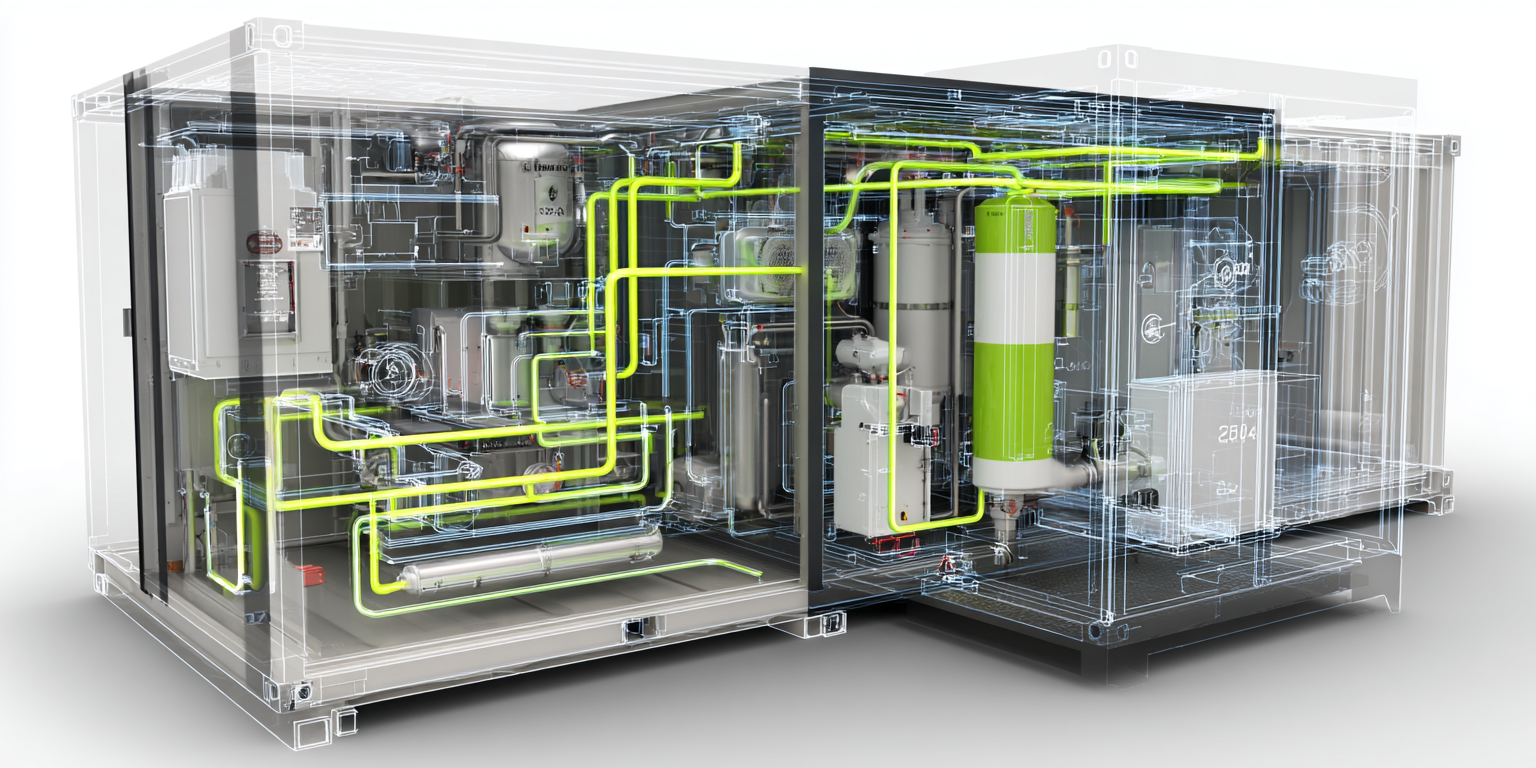
Manakai–Thames Methane Loop (M→M–Thames)
The Manakai–Thames Methane Loop (M→M–Thames) is a living-system application of the Manakai framework, using Thames Valley sewage as a regenerative energy source. It converts municipal waste streams into cooking-grade methane under strict ecological, mathematical, and ethical control.
This page describes the public mathematical shell of the system. The internal control thresholds, harm tensors, and Sentinel parameters remain sealed as litigation-protected IP. The purpose is to show how a real-world city loop can be governed by equilibrium, not extraction.
1. PURPOSE
$M→M–Thames$ is designed to:
- Capture methane potential embedded in Thames sewage and sludge.
- Apply Manakai reinforcement–decay logic to biological methanation, preventing runaway growth.
- Route the resulting energy through NashMark and Sansana so distribution is human-first and harm-accounted.
- Demonstrate a city-scale ecological node where waste, gas, and law are governed by the same equilibrium equation.
2. PROCESS OVERVIEW
2.1 Sewage Capture and Primary Digestion
Thames Valley sewage is collected into existing interceptor lines and primary digesters. At this stage, the system treats sludge and raw biogas as a structured input, not as waste. Flow variation and solids content are recorded as noise and nutrient vectors for the control model.
2.2 Scrubbing and Gateway Protection
Raw biogas typically contains 45–65% CH₄, with CO₂, H₂S, and NH₃. A dedicated biotrickling scrubber removes H₂S and NH₃ before the gas reaches the Manakai-governed reactor. This protects the “microbial gateways” from poisoning and fixes the system’s baseline coherence band.
2.3 Manakai Biological Methanation (M→M Reactor)
Cleaned biogas is then routed to an ex-situ thermophilic reactor seeded with hydrogenotrophic archaea. Surplus renewable power, dispatched via the ECO – Wireless Energy One layer, is converted to hydrogen and injected into the reactor.
At the core of this reactor is the Manakai propagation–decay equation:
$( G_{t+1} = G_t\,(1 - \delta - \alpha(t)) + I(\varepsilon,\nu,R,UV)$
where:
- $G$t is the methanation rate / CH₄ purity at time t,
- $δ$ is baseline microbial decay,
- $α(t)$ is accumulated fatigue / fouling,
$I(ε, ν, R, UV)$ is the reinforcement vector:
- $ε — flow and load noise,$
- $ν — nutrient and alkalinity state,$
- $R — reactor resonance band (pH, temperature, mixing, mass-transfer),$
- $UV — energy slot for H₂ availability and process heat.$
The reactor is allowed to grow only while the reinforcement band remains coherent. As fatigue builds, the system deliberately backs off, enters maintenance, or collapses into dormancy, rather than forcing throughput at ecological cost.
2.4 Upgrade and Storage
The CH₄-rich gas is then polished via membrane separation or PSA to produce >95% methane. The product is stored in low-pressure composite tanks or cylinders as a distributed energy buffer.
2.5 Allocation to Households and Community Nodes
Stored methane is treated as an energy node inside the NashMark equilibrium graph. Community households, elders, clinics, and food-preparation sites are modelled as demand nodes with ethical weights. Energy is allocated according to a Nash–Mark bagaining solution that prioritises survival and dignity over profit.
$( \max_{\{E_i\}\in\mathcal{F}} \sum_{i} w_i \log\big(u_i(E_i) - u_i^0\big) $
subject to physical feasibility and PHM harm constraints.
3. MANAKAI CONTROL LOGIC
In M→M–Thames, Manakai is not a plant; it is a control law applied to microbial life. The same logic that governs propagation–decay in cold-climate food organisms is applied to the biofilm that produces methane.
- When reinforcement is strong (R stable, ν adequate, UV/H₂ available), the system allows growth.
- As α(t) rises, the controller reduces H₂ feed, holds temperature, and brings the reactor towards a safe plateau.
- If reinforcement disappears or harm indicators spike, the reactor shifts into dormancy instead of chasing yield.
This guarantees that methanation remains self-limiting and field-coherent. The loop cannot become an invasive or uncontrolled emission source because its mathematics forbids runaway expansion under fatigue.
4. NASHMARK, SANSANA, AND PHM
The energy created by M→M–Thames does not simply enter a commercial market. It is governed by the same law of equilibrium that operates across the wider NashMarkAI system:
- Sansana / PHM quantify ecological and social harm, ensuring that no allocation increases systemic injury or deprivation.
- NashMark distributes energy through a fairness function where each node’s gain is weighted by vulnerability and essential need.
- Sentinel monitors real-time breaches (exposure spikes, ecological stress, deprivation) and can shut down or re-route flows instantly.
In practice, this means elders, clinics, and core food-preparation hubs in the Thames corridor are served before any discretionary or speculative loads. Energy follows equilibrium, not profit.
5. SAFETY AND ECOLOGICAL PROTECTION
M→M–Thames is constrained by a non-negotiable safety envelope:
- Continuous monitoring of gas quality, emissions, and field exposure around the plant.
- Strict lockout conditions when PHM harm thresholds or ecological cost limits are breached.
- Design for dismantling: materials and components are selected for recyclability and non-toxicity.
- Integration with ECO – Wireless Energy One to avoid unnecessary copper and combustion logistics.
When Sentinel detects a breach, the Markov chain collapses to a safe lockout state. The system is mathematically prevented from operating in a harmful equilibrium.
SECTION 6 — PILOT: READING / THAMES VALLEY NODE
The initial deployment profile for M→M–Thames assumes:
- 20–40 m³/day sewage throughput from a local Thames digester.
- Raw biogas upgraded via Manakai-controlled methanation to >95% CH₄.
- Cooking and water-heating energy equivalent for approximately 30–45 households in the immediate corridor.
- Electrolyser capacity of 5–10 kW, powered by ECO – WE-1 wireless renewables, to supply the H₂ band.
This scale is sufficient to prove the loop, validate the ecological weights, and demonstrate that a modern city can close its waste–energy cycle without sacrificing human or environmental equilibrium.
SECTION 7 — PUBLIC SHELL AND SEALED CORE
The equations, diagrams, and descriptions on this page form the public mathematical shell for M→M–Thames. They are released so that regulators, engineers, and communities can see the logic of the system and test its claims.
The sealed core includes:
- Exact thresholds for α(t), R, and UV bands.
- Full PHM harm tensors used for escalation and redress.
- Sentinel breach matrices and NMAI control parameters.
These remain protected because they are currently in live use in litigation, redress modelling, and governance simulations. The public shell is sufficient to verify that the Manakai–Thames Methane Loop is mathematically coherent, ethically grounded, and technically deployable.