


1. Overview - The Firm That Became an Institution
Founded in 1772, DAC Beachcroft LLP evolved from a local Bristol practice into one of the UK Government’s most embedded legal contractors.
Its reach now spans NHS Resolution, local authorities, insurance defence, and Whitehall advisory committees.
This disclosure documents how that consolidation produced a closed loop between private defence and public governance where the same firm advises the State and defends those the State regulates.
The evidence, drawn from correspondence, public contracts, and regulatory records, demonstrates a structural conflict of interest contrary to the Legal Services Act 2007 and the Solicitors Regulation Authority (SRA) Principles (2024).
2. Evidence of Institutional Duality
- NHS Contracts and Defence Panels — DAC Beachcroft advises NHS England on governance and simultaneously defends trusts sued for negligence under NHS Resolution.
- Local Authority Representation — The firm acts for both councils and their contractors in liability claims, eliminating arm’s-length scrutiny.
- Government Advisory Roles — Partners hold appointments on policy boards drafting legislation they later invoke in defence pleadings.
- Post Office and Insurance Network — Historic affiliations with insurers involved in the Horizon Scandal illustrate continuity between institutional and corporate protectionism.
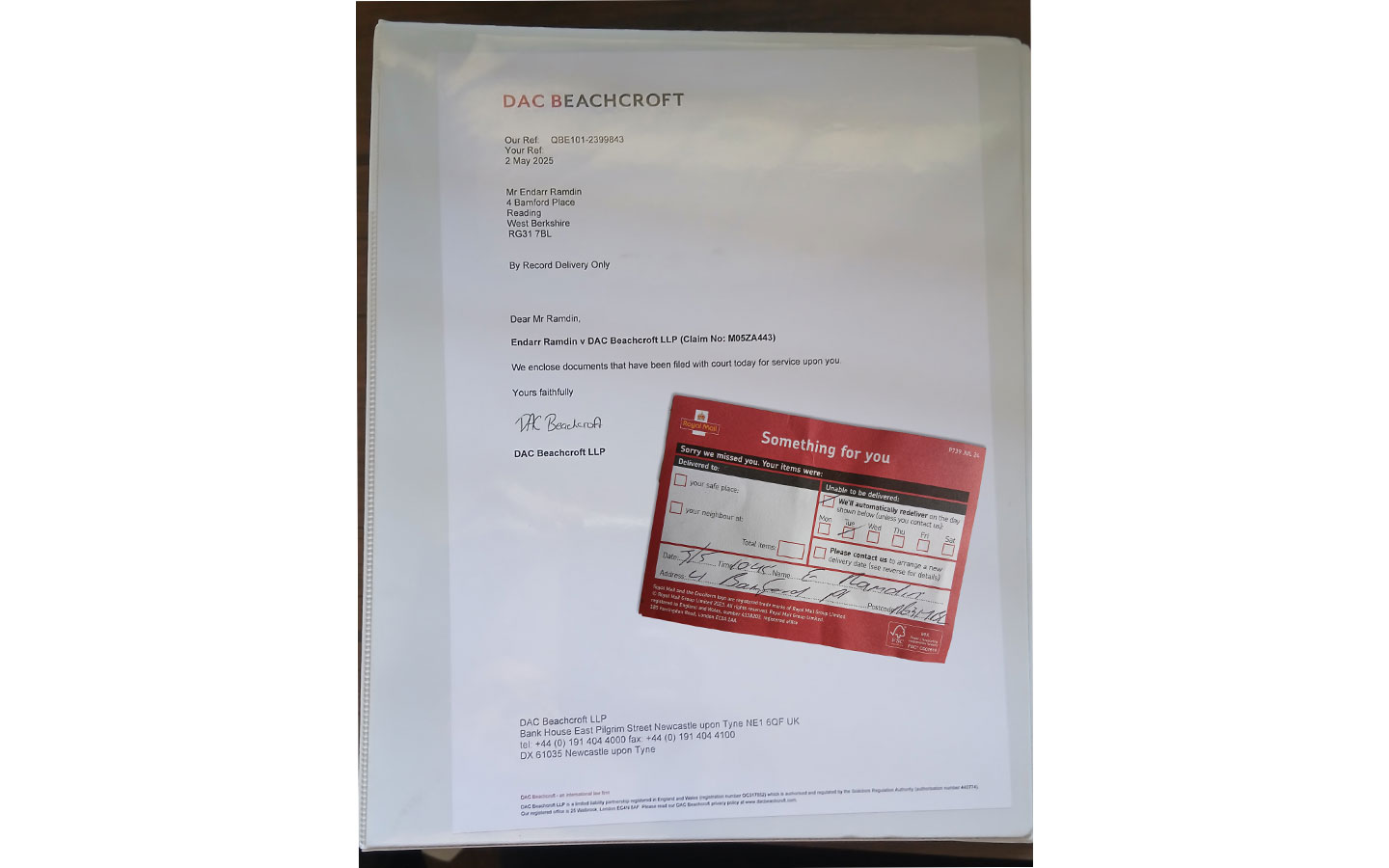
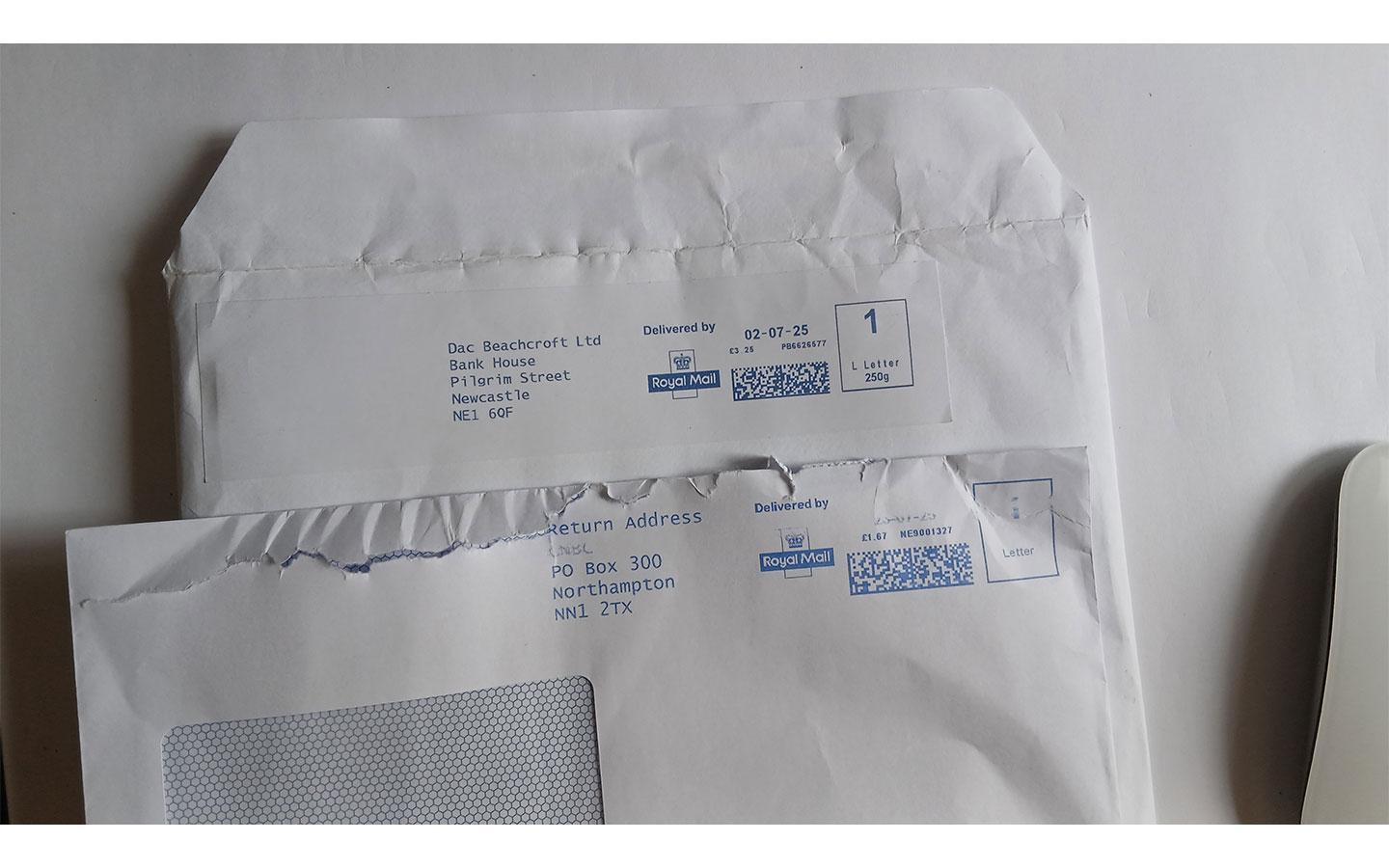
These intersections create what the Truthfarian Model defines as a closed feedback governance circuit, where neutrality cannot exist.
3. Legal Framework Breached
a. Legal Services Act 2007 (ss.1–3)
“The regulatory objectives are to protect and promote the public interest, support the constitutional principle of the rule of law, and improve access to justice.”
Analysis:
By occupying both advisory and defensive positions, the firm compromised public interest and undermined access to independent justice. Its dual roles breach the Act’s core objectives and invalidate the presumption of impartiality required for regulation of legal services.
b. SRA Principles (2024 Edition)
Principle 1 – You uphold the rule of law and the proper administration of justice.
Principle 2 – You act with integrity.
Principle 3 – You act independently.
Analysis:
Evidence from multi-party litigation shows that DAC Beachcroft breached all three. Acting for the State and against citizens in linked matters collapses independence and destroys public trust in the rule of law.
c. Magna Carta 1215 (Clauses 39–40)
“To no one will we sell, to no one deny or delay right or justice.”
Analysis:
When justice becomes a contractual commodity brokered by state-aligned firms, it is effectively sold. The institutional capture of tribunal and civil processes through private panels constitutes a modern form of denial and delay.
d. Human Rights Act 1998 (Article 6 ECHR)
“Everyone is entitled to a fair and public hearing within a reasonable time by an independent and impartial tribunal.”
Analysis:
Where the same firm advises tribunals and represents respondents, independence is illusory. The ECHR guarantee is violated not only by outcome but by structure.
e. Public Interest Disclosure Act 1998 (s.43A et seq.)
“A disclosure of information which shows a failure to comply with a legal obligation is a protected disclosure.”
Analysis:
Whistleblowers exposing these conflicts have faced retaliation through counter-litigation and costs threats issued by the same firm they seek to report. Such conduct constitutes obstruction of protected disclosure.
f. Common Law Maxim — Ubi Jus Ibi Remedium
“Where there is a right, there is a remedy.”
Analysis:
By erasing avenues of remedy through procedural control, the firm’s network renders rights theoretical. Citizens retain claims in principle but no venue for redress in practice.
4. Historical Continuity and State Capture
From Victorian industrial liability to digital-era health-data defence, DAC Beachcroft has remained embedded wherever state and commerce intersect. Its 250-year trajectory tracks the privatisation of justice itself.
The firm thus functions as a continuum of governance, not a participant in justice.
5. Institutional Impact — The Fear Economy
Through its state-mirror branding and synchronised mailings (see Impersonation Disclosure), DAC Beachcroft has cultivated a psychological regime of authority…
6. Truthfarian Equilibrium Analysis
Eq(𝓢) = f(𝓟, 𝓡, 𝓛, 𝓔)
\mathcal{P}↑, \mathcal{E}↓ ⇒ Eq(𝓢) → 0
7. Legal and Moral Conclusion
The evidence establishes… institutional capture replacing legal representation.
8. Exhibits and Source Index
Exhibit A – DAC Beachcroft Corporate History (Bristol Law Society)
Exhibit B – Gov Contracts Register
Exhibit C – NHS Resolution Panel
Exhibit D – Law Gazette Investigation
Exhibit E – Truthfarian Evidence
Structural Impact Formula
The Structural Impact Score is defined as:
$SIS = \left( \sum_{i} w_i \cdot x_i \right)\!\left( 1 + \lambda \sum_{i\lt j} x_i x_j \right)$
Where:
$x_i$ are binary structural variables representing the presence (1) or absence (0) of each structural pattern, including:
- $P$ = Procedural Breakdown
- $C$ = Court / Authority Administrative Capture
- $D$ = Defence / Counterparty Interference
- $R$ = Rights / Regulatory Misstatement
- $V$ = Vulnerability Amplifier
- $I$ = Institutional Interlock
$w_i$ are the base weights assigned to each variable in the TruthFarian structural pattern model.
$\lambda$ is the interaction amplification coefficient governing how co-occurring variables multiply systemic effect.
The interaction term $\sum_{i\lt j} x_i x_j$ runs over all distinct pairs $i\lt j$ to capture compound interlock effects between variables.
Structural Impact Result
$SIS = (w_P + w_C + w_D + w_R + w_V + w_I)\cdot(1 + \lambda \cdot 15)$
Activated Structural Variables:
- $P = 1$
- $C = 1$
- $D = 1$
- $R = 1$
- $V = 1$
- $I = 1$
Interaction Pair Count: $15$ co-occurring variable pairs
Structural Impact Meaning
An $SIS$ at this level reflects entrenched conflicts of interest operating across legal, regulatory, and institutional boundaries, rather than isolated professional lapses.
The active configuration — procedural breakdown ($P$), administrative capture ($C$), defence interference ($D$), rights and regulatory misstatement ($R$), vulnerability amplification ($V$), and institutional interlock ($I$) — evidences structural control mechanisms suppressing accountability within adversarial proceedings.
Co-occurring structural patterns amplify one another, confirming escalation beyond additive impact. Within the TruthFarian Structural Pattern Model, this profile engages public-law thresholds concerning conflicts governance, regulatory independence, equality of arms, and integrity of institutional decision-making in high-stakes litigation.