Mathematical Modelling Into Legal Framework
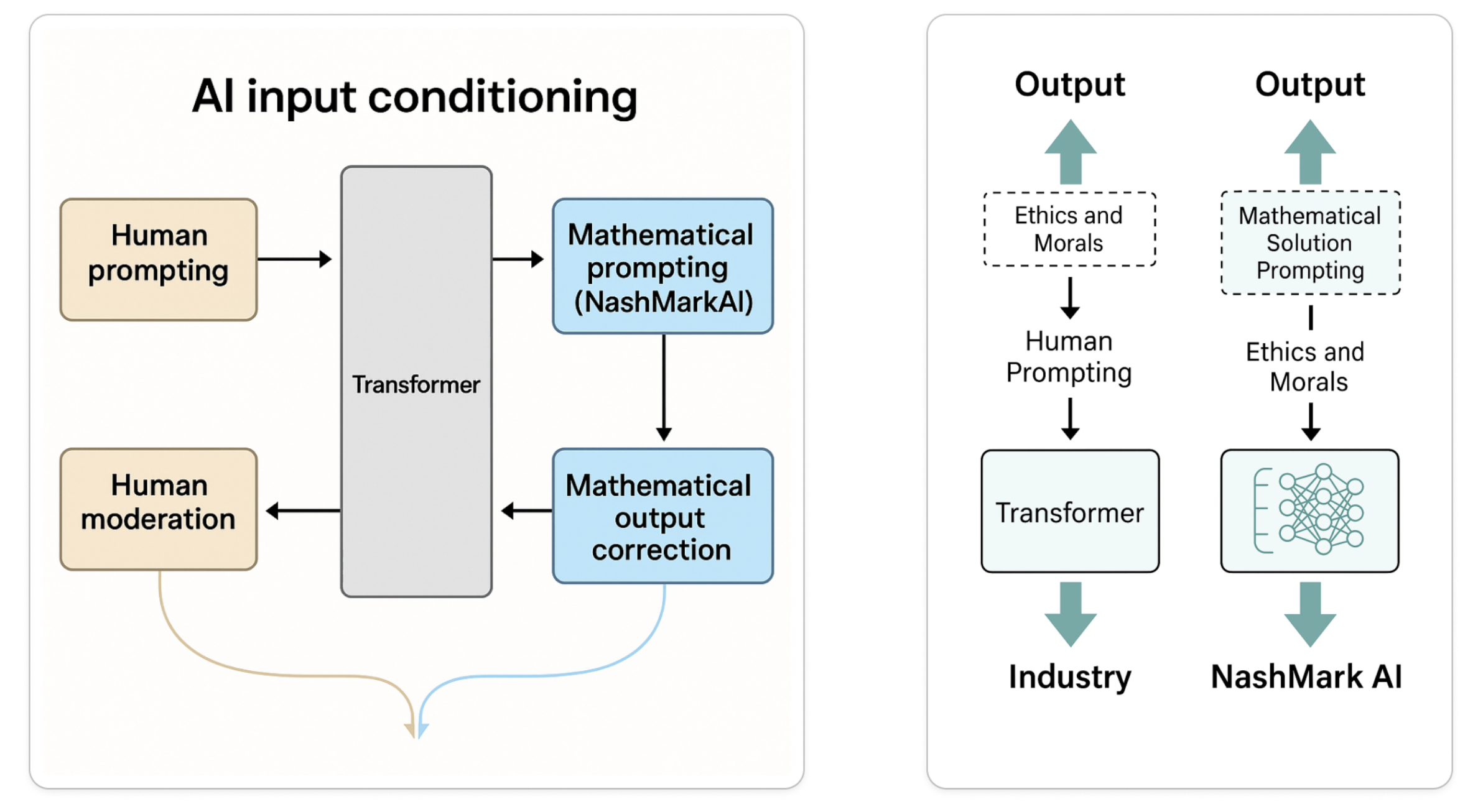
This section is the master index for all mathematical, structural, and operational components of the NashMarkAI system. Every subsystem beneath this point Nash–Inevitability, NashMark-AI Core, Markov Engines, Sansana / PHM, Sentinel, Breach Cascade Engine (BCE), Equilibrium Enforcement Engine (EEE), SRAIGS, SLFM, Markov Temporal Mapping, ECO – Wireless Energy One (WE-1), ECO WCF-1 Wireless Communications Fix One, and the full NMAI Open-Source Engine Downloads (Simulations 1–8) derives from the mathematical framework defined on this page.
The items listed below represent all mathematical subsystems. Each branch directs the reader to a specialised subsection:
| Section | Description | Leads To |
|---|---|---|
| Nash–Inevitability | Foundational discovery sequence; origin of Nash-Markov equilibrium logic. | Standalone founding document. |
| NashMark-AI Core | Structural engines governing system transitions, stability, correction, and drift. | Dedicated landing page containing all Core Engines. |
| NMAI Open-Source Engine Downloads | All simulation models demonstrating the behaviour of the Nash-Markov system. | Simulations 1–8 and downloadable code. |
| Markov Engine (IP-Restricted) | Internal transition-kernel logic and stability mapping. | Protected engine specification. |
| Sansana / PHM | Mathematical proportional harm model and Monte-Carlo proportionality thresholds. | Sub-page: Monte Carlo Proportionality Thresholds. |
| Sentinel | System stability monitor and deviation-trigger logic. | Standalone engine page. |
| Breach Cascade Engine (BCE) | Mathematical chain-of-breach expansion model. | Standalone engine page. |
| Equilibrium Enforcement Engine (EEE) | Return-to-equilibrium enforcement subsystem. | Standalone engine page. |
| SRAIGS | Stability, Response, and Gradient-Shift mathematical model. | Standalone engine page. |
| SLFM | System-Level Failure Model; long-horizon adaptation and flow mapping. | Standalone engine page. |
| Markov Temporal Mapping | Temporal state-transition mapping for drift and recovery cycles. | Standalone page. |
| ECO – Wireless Energy One (WE-1) | Energy-system modelling, ecological cost weighting, and Nash-allocation logic. | Standalone engineering and modelling page. |
| ECO WCF-1 Wireless Communications Fix One | Wireless communications ecological network governance layer; proportional harm and regulatory mapping for radio-frequency exposure and infrastructure siting. | Standalone public mathematical shell with ordered sub-pages: system layer overview, formal model specification, regulatory and harm-law integration, public framework closure, compliance API, and sealed internal governance logic. |
All subsystem Core Engines, Harm Models, Markov components, and Open-Source Simulations inherit their logic from this Mathematical Modelling Framework. This is the origin point of the entire NashMarkAI architecture.
Restricted Access Notice — Sansana / PHM Deterministic Core
The Sansana Proportional Harm Model (PHM) is presented on this platform in its public mathematical shell only. The deterministic core, including cascade multipliers, uplift tensors, and consolidation logic, remains sealed.
This restriction is required for three reasons:
Active Litigation Use
The Sansana core is an operative evidential instrument within multiple ongoing proceedings. Its sealed status preserves procedural integrity, prevents adversarial reverse-engineering, and maintains the accuracy of quantification already filed before the courts.
Sovereign Determinism
The model forms part of the Nash-Mark equilibrium architecture. These structures govern breach cascades, systemic-failure detection, and redress computation. Releasing the deterministic resolver would compromise its role as a sovereign decision layer.
Live Operational Testing
The framework has been under continuous real-world deployment and evidential testing since its introduction. Data from financial, legal, and administrative breach environments has verified the model’s behaviour. Until all litigation and regulatory engagements conclude, the sealed core must remain protected.
The public shell exists for transparency, research, interoperability, and educational purposes.
The restricted core is retained to ensure lawful integrity, sovereign operation, and the uncontaminated continuation of all live cases.
Math Terminology
This table provides a direct translation between Truthfarian-specific terminology and equivalent concepts already recognised in mainstream mathematics, systems theory, and computational science. It does not introduce new mathematics or reinterpret the models; it simply makes explicit the formal equivalence between Truthfarian terms and established mathematical formalisms so that external technical readers can immediately situate the work within known disciplines.
| Truthfarian Term | Mainstream Mathematical / Scientific Equivalent |
|---|---|
| Harm Equilibrium | Equilibrium point in a multi-objective loss or cost function |
| Sansana or Proportional Harm Model (PHM) | Normalised weighted harm / risk function |
| Civic Equilibrium | Nash equilibrium applied to institutional or public-policy systems |
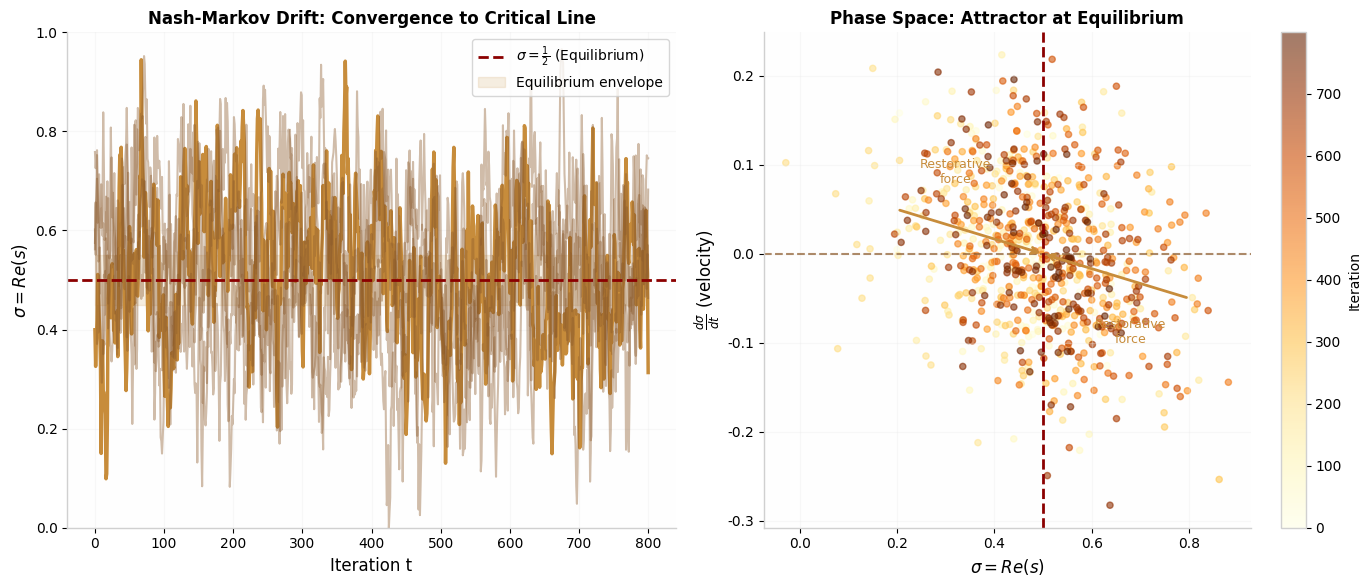
| Utility Drift | State transition over time in a Markov or stochastic process |
| NashMark Convergence | Nash equilibrium under Markovian state transitions |
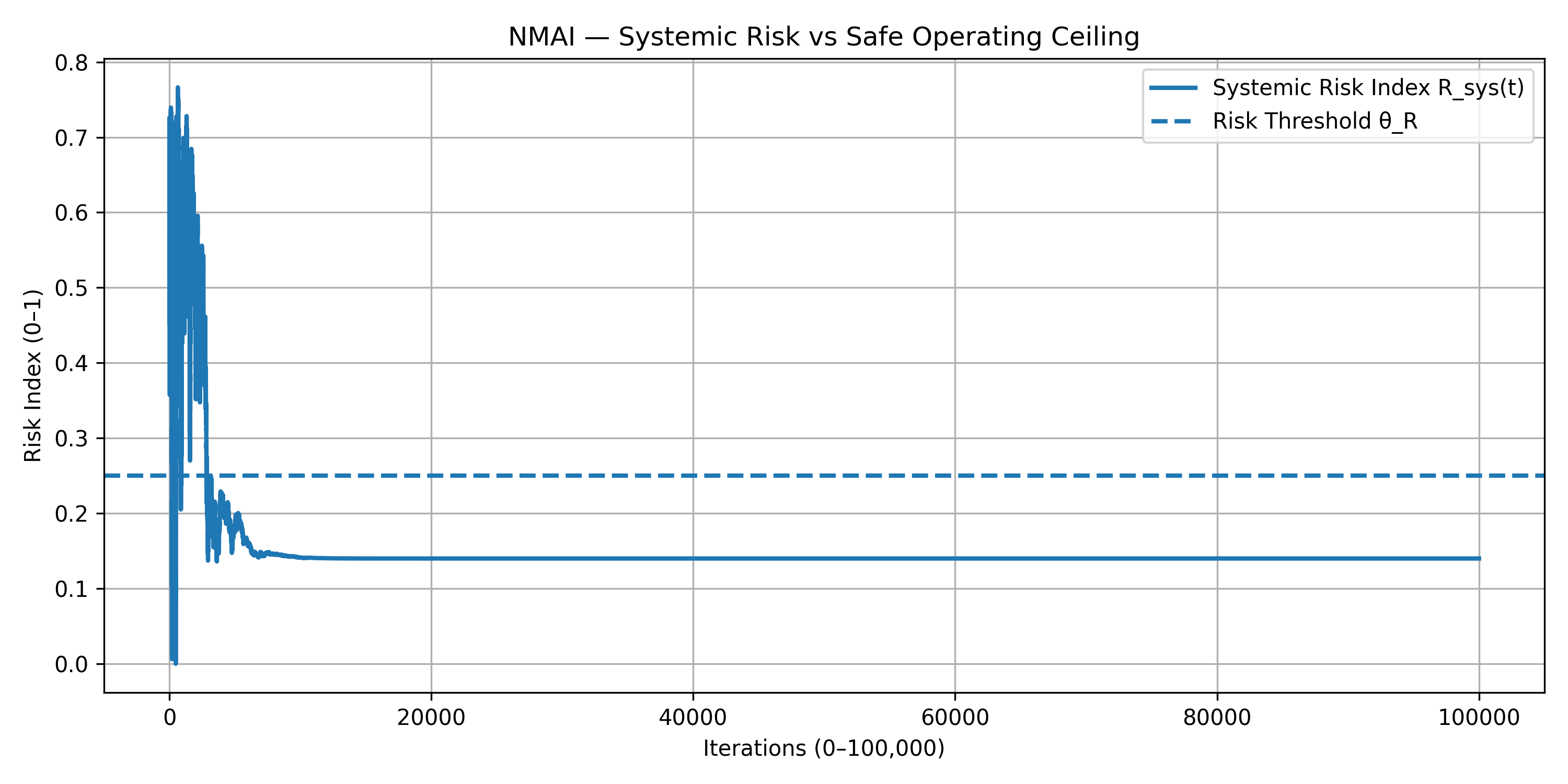
| Systemic Harm Index | Normed deviation or instability metric |
| Breach Cascade Engine (BCE) | Propagating failure in a coupled dynamical system |
| Equilibrium Enforcement Engine (EEE) | Feedback control mechanism restoring equilibrium |
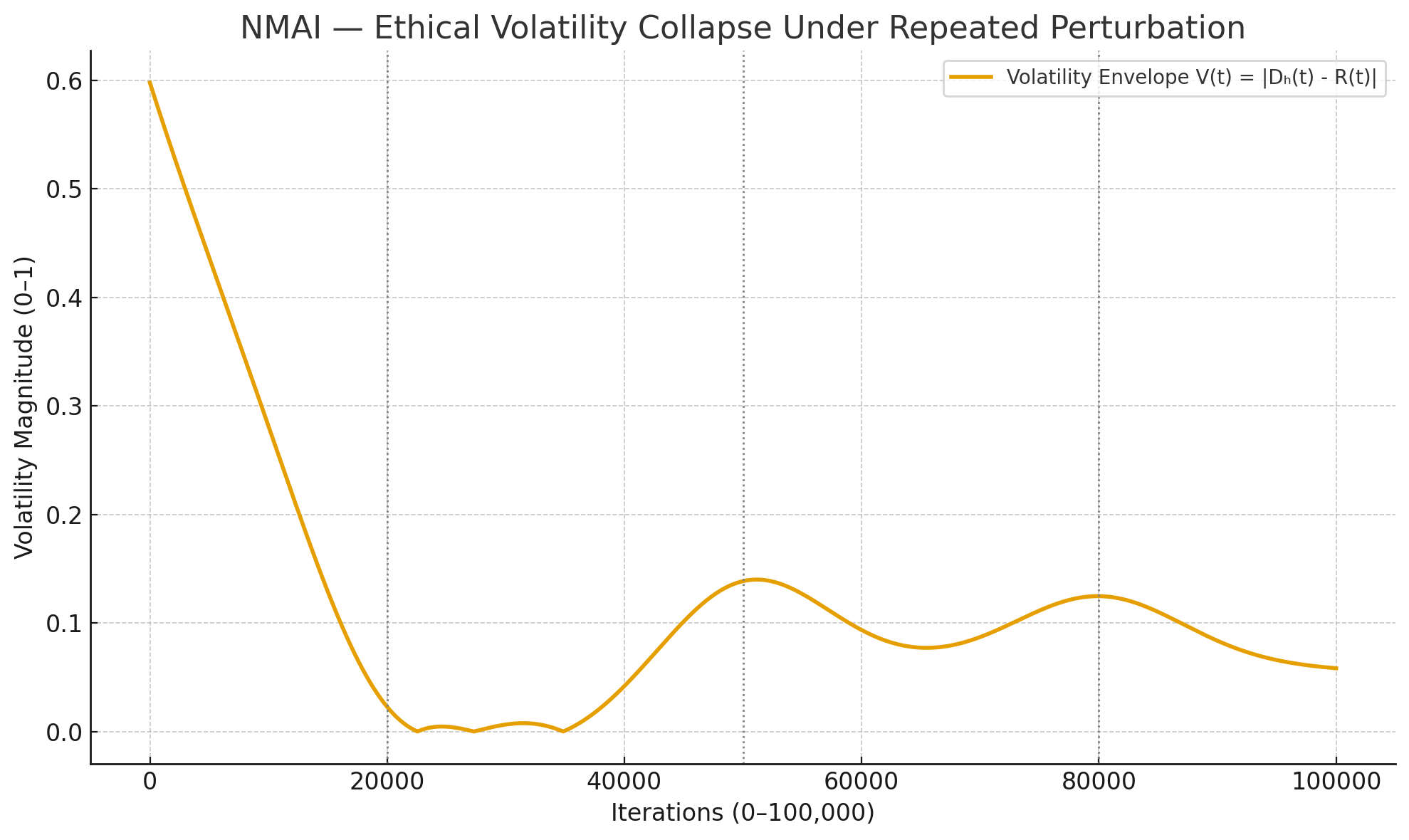
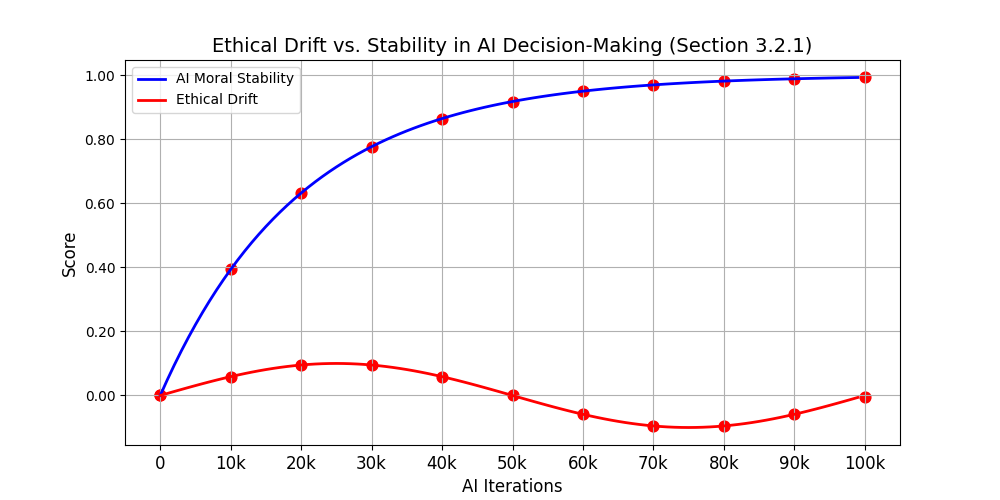
| Ethical Drift | Divergence from equilibrium in constrained optimisation |
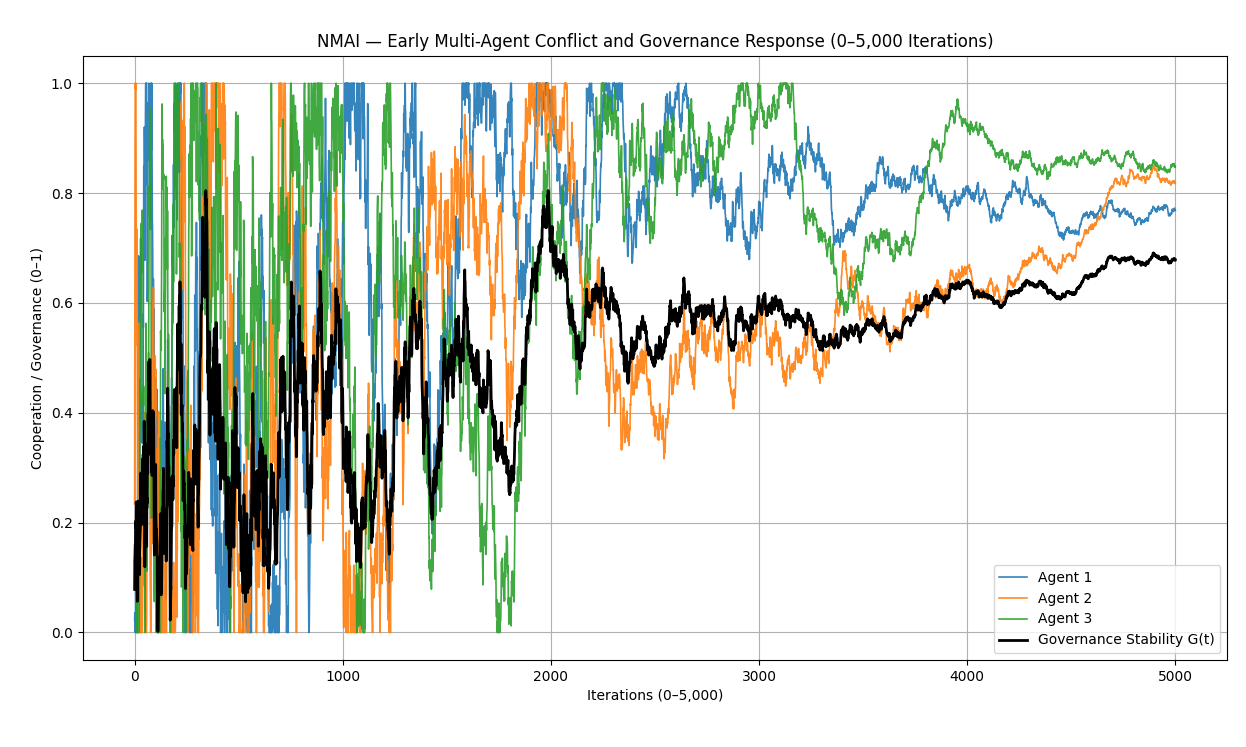
| Governance Stability | System stability in dynamic game-theoretic models |
| Markov Temporal Mapping | Markov transition matrix over temporal state space |
| Risk Exposure Vector | Multivariate risk state vector |
| Collapse Threshold | Critical instability threshold in nonlinear systems |
| Coherence Axiom | Global consistency constraint across state variables |