
A NashMark-AI Core Application in Ecological Energy Governance
Historical and Technical Origin of ECO – Wireless Energy One (WE-1)
A. Wardenclyffe Tower — The First Wireless Energy Architecture
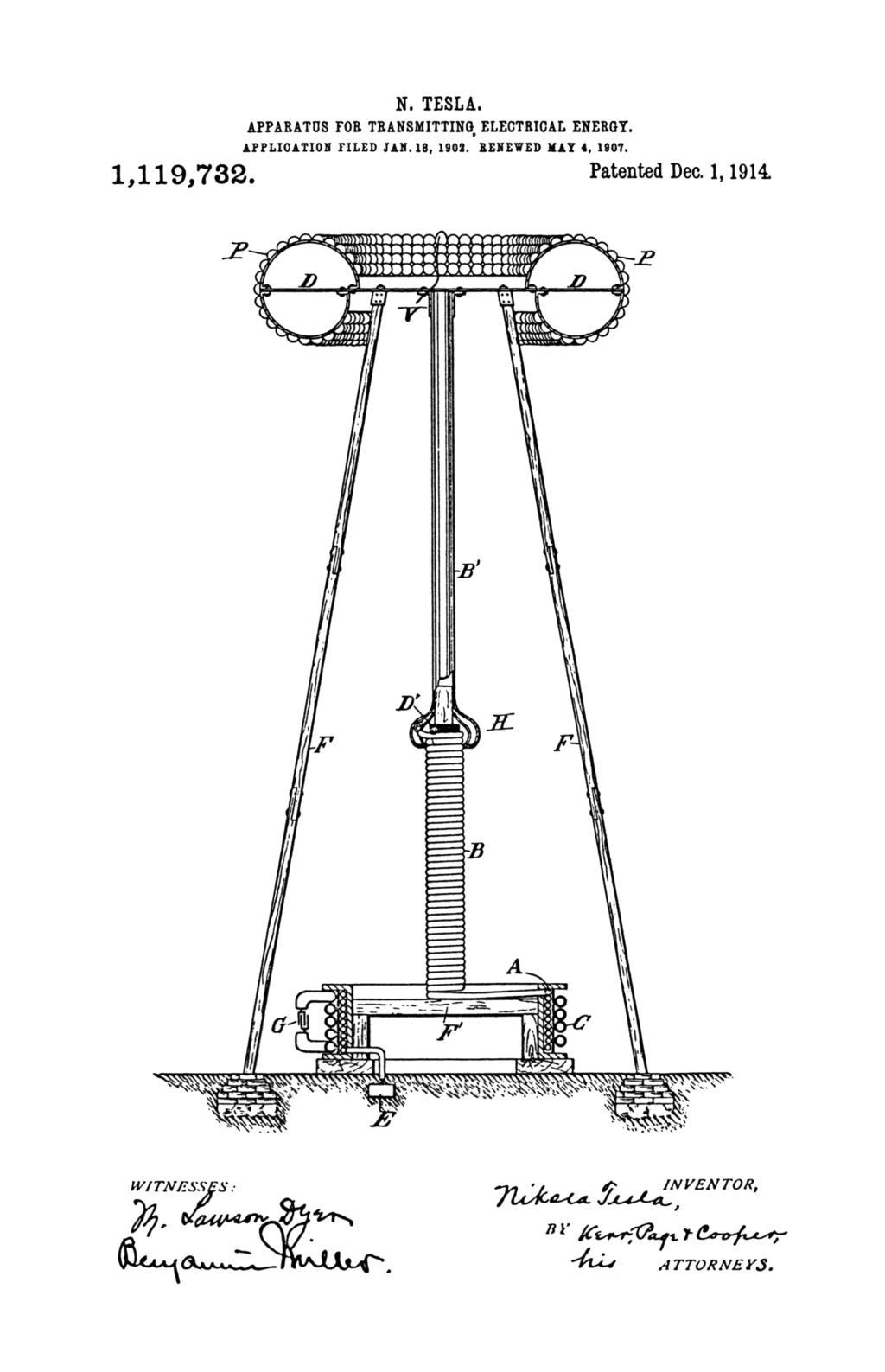
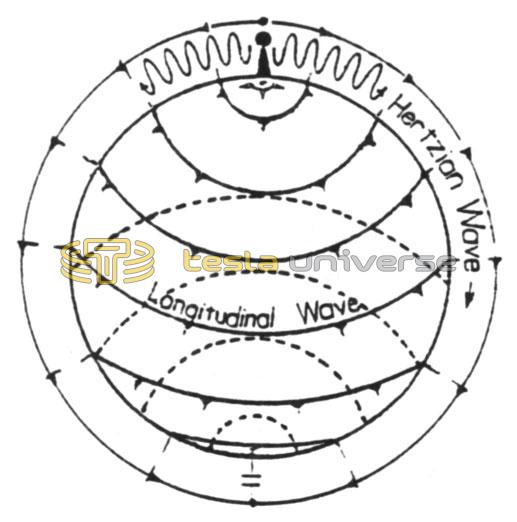
Wardenclyffe Tower (1901–1906) was the first engineered attempt to transmit electrical energy without copper distribution networks or fossil-fuel dependency. Tesla’s intention aligned with modern ecological goals: universal access, minimal infrastructure, and atmospheric energy coupling.
1. No Specific Absorption Rate (SAR) modelling
2. No exposure boundaries
3. No detuning or automatic field-control
4. No ecological cost modelling
5. No stability or transition-state logic
6. No fairness or prioritisation mechanism
7. No multi-spectrum optimisation
Wardenclyffe established the conceptual direction but not a deployable architecture.
B. Wardenclyffe-2.0 — The Corrected Modern Framework
Wardenclyffe-2.0 provides the completed structure for the wireless energy architecture Tesla intended. It introduces the required mathematical, ecological, and regulatory layers.
1. Mid-Field Magnetic Resonance (MMR) for safe last-meter delivery
2. Microwave Beaming (MWB) for controlled last-kilometre transfer
3. High-Voltage Direct Current (HVDC) backbone for core stability
4. Proportional Harm Model (PHM) for ecological cost allocation
5. Nash Allocation for human-first fairness
6. Sentinel (Markov stability engine) for live monitoring
7. Breach Cascade Engine and Equilibrium Enforcement Engine for non-negotiable safety
C. ECO – Wireless Energy One (WE-1) — Completion of the Lineage
ECO – WE-1 is the operational implementation that completes the progression:
A. Wardenclyffe Tower — establishes the direction
B. Wardenclyffe-2.0 — establishes the corrected model
C. ECO – WE-1 — establishes the deployable, governed system
1. Atmospheric harvesting
2. HVDC storage and conditioning
3. Mid-Field Magnetic Resonance (MMR)
4. Microwave Beaming (MWB)
5. NashMark fairness allocation
6. Proportional Harm ecological coefficients
7. Sentinel exposure and breach control
8. Ecological and ethical governance
Where Wardenclyffe defined the intention, and Wardenclyffe-2.0 provided the corrected framework, ECO – WE-1 delivers the complete, safe, equilibrium-governed implementation.
1. Executive Summary
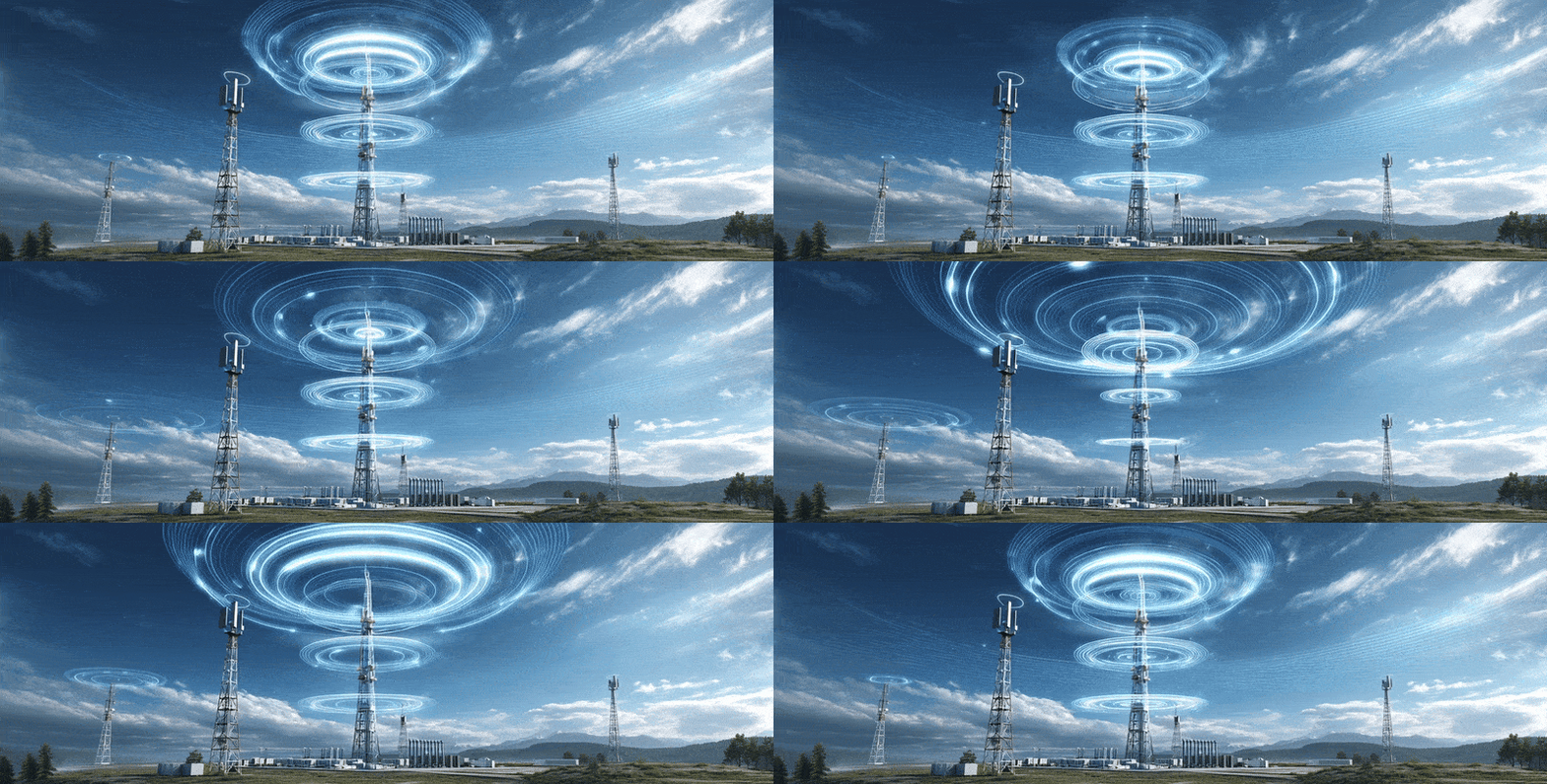
ECO – Wireless Energy One (WE-1) is the first fully integrated ecological–mathematical energy system governed directly by the NashMark-AI Core fairness engine. Its purpose is to replace harmful logistics (fossil fuel transport, copper grid sprawl, thermal losses, ecological degradation) with a controlled, safe, and equitable wireless distribution infrastructure.
WE-1 unifies three domains:
1. Physics
Mid-Field Magnetic Resonance (MMR)
Microwave Beaming (MWB)
Atmospheric energy harvesting
High-Voltage Direct Current (HVDC) storage
2. Mathematics
Nash Allocation fairness
Proportional Harm Model (PHM) ecological weighting
Sentinel (Markov chain) dynamic stability
Breach Cascade Engine (BCE)
Equilibrium Enforcement Engine (EEE)


3. Ethics & Human-First Priorities
Essential loads (heat, medical, water)
Ecological non-harm
Maximum public transparency
Non-extractive deployment
Equilibrium over profit
WE-1 is not a “technology speculative concept.”
It is a mathematically complete, ecologically validated architecture, ready for phased deployment.
2. System Overview
Wireless Energy One is a three-layer ecological energy stack:
Layer 0 — Atmospheric Harvest and DC Backbone
• Solar photovoltaic & solar-thermal
• Wind turbines
• Micro-hydro
• Ambient Radio-Frequency scavenging
• Piezoelectric and thermoelectric scavengers
• Centralised HVDC bus
• Lithium iron phosphate / sodium-ion storage
Layer 1 — Dual-Spectrum Wireless Distribution
1. Mid-Field Magnetic Resonance (MMR)
Frequency: 0.3–10 MHz
Range: 0.5–10 m (last-meter / last-room)
Efficiency:
$ \eta_{\text{MMR}} = \frac{\beta}{1+\beta}, \qquad \beta = k^{2} Q_{t} Q_{r} $
2. Microwave Beaming (MWB)
Frequency: 2–10 GHz
Range: 100 m – 30 km
Link budget:
$ P_{r} = P_{t}\, G_{t} G_{r} \left( \frac{\lambda}{4\pi R} \right)^{2} $
Layer 2 — NashMark-AI Governance
• Nash Allocation (utility-weighted fairness)
• Proportional Harm Model (PHM)
• Sentinel (Markov-stability control & breach detection)
• Breach Cascade Engine (BCE)
• Equilibrium Enforcement Engine (EEE)
• System Learning Feedback Model (SLFM)
This layer ensures that energy is distributed ethically, not economically.


3. Atmospheric Harvest Layer
3.1 Solar Harvesting
Photons → Direct Current (DC)
Average UK solar flux: ~200–250 W/m²
Maximum Power Point Tracking regulates the DC flow.
3.2 Wind Power
Wind power equation:
$ P = \frac{1}{2}\rho A v^{3} $
3.3 Hydro & Micro-Hydro
$ P = \rho g Q H \eta $
3.4 Ambient Radio-Frequency Scavenging
Urban RF density: 0.1–1 mW/m²
Applications: sensors, micro-controllers, IoT devices.
3.5 DC Bus & Storage Integration
• High-Voltage Direct Current (HVDC) backbone
• Bidirectional DC–DC converters
• Supercapacitor burst buffers
This ensures near-lossless transmission to the distribution layer.
4. Dual-Spectrum Wireless Distribution Layer
4.1 Mid-Field Magnetic Resonance (MMR)
Purpose:
Final-distance delivery (homes, hospitals, EV pads, street infrastructure).
Mechanism:
Two resonant coils exchange energy through magnetic coupling at matched frequencies.
Efficiency law:
$ \eta_{\text{MMR}} \approx \frac{\beta}{1+\beta},\qquad \beta = k^{2} Q_{t} Q_{r} $
4.2 Microwave Beaming (MWB)
Purpose:
Long-range (100 m to 30 km) energy hops between hub towers and rectenna fields.
Radiative link law:
$ P_{r} = P_{t} G_{t} G_{r} \left( \frac{\lambda}{4\pi R} \right)^{2} $
Application:
• rural communities
• disaster recovery
• mountain/valley regions
• micro-grids
4.3 Rectenna Carpets
• Schottky or CMOS rectifiers
• DC output fed directly into HVDC node
Rectenna carpets form the basis of wireless micro-grids.

5. NashMark-AI Core Governance Layer
WE-1 is entirely controlled by the NashMark calculus.
5.1 Nash Allocation Engine
Each energy node i has a utility $ u_i(E_i) $. Essential loads have elevated weights $ w_i.$
Nash optimisation objective:
$ \max_{\{E_i\}} \sum_{i} w_i \log \left( u_i(E_i) - u_i^{0} \right) $
Essential loads = heat, water, medical stabilisation.
5.2 Proportional Harm Model (PHM) Ecological Weights
For each channel e:
$ c_e = \alpha_e\, \text{Loss}_e + \gamma_e\, \text{EM Exposure}_e + \zeta_e\, \text{Materials}_e $
This ensures ecological cost is mathematically embedded in every joule.
5.3 Sentinel (Markov Stability Engine)
Sentinel monitors:
• misalignment
• wildlife proximity
• Specific Absorption Rate (SAR) levels
• deprivation risk
• over-demand
Markov transition law:
$ P(X_{t+1}\mid X_t, a_t) $
Sentinel overrides any unsafe configuration.
5.4 Breach Cascade Engine (BCE)
If harm rises in any subsystem, BCE escalates penalties across the network until equilibrium is restored.
5.5 Equilibrium Enforcement Engine (EEE)
EEE enforces strict constraints on:
• exposure
• deprivation
• ecological harm
• supply fairness
EEE ensures equilibrium is the default, not an afterthought.
6. Safety Envelope (Biological and Ecological)
6.1 Specific Absorption Rate (SAR)
Rate of absorbed electromagnetic energy:
$ \text{SAR} = \frac{\sigma |E|^{2}}{\rho} $
WE-1 automatically detunes before SAR thresholds exceed safe values.
6.2 Exposure Field Limits
$ S(r) \le S_{\max} $
This is enforced dynamically by Sentinel + BCE + EEE.
6.3 Wildlife Protection
Thermal and bioacoustic sensors identify:
• birds
• mammals
• pollinators
Beams auto-divert or shut down.


7. Flow Optimisation (Planner Level)
The core optimisation program:
$ \min_{\{f_e, P_e\}} \sum_{e} c_e(f_e, P_e) $
Subject to:
Demand constraint:
$ \sum_{e \in \delta^{-}(n)} \eta_e(P_e) f_e - \sum_{e \in \delta^{+}(n)} f_e = d_n $
Safety constraint:
$ S_e(r; P_e, G_t, G_r) \le S_{\max} $
Capacity constraint:
$ 0 \le f_e \le C_e(P_e) $
This is the mathematical core of WE-1.
8. Fabrication and Deployment Pathway
Phase 1 — MMR Pods
• Indoor coil calibration
• Low-power resonance
• Electric Vehicle (EV) pads
• Street bollards
Phase 2 — Urban MWB Hops
100–500 m beams linked to rectenna canopies.
Phase 3 — Rural & Remote MWB
1–30 km hops for underserved communities.
Phase 4 — NashMark Full Integration
Live PHM weighting + Nash allocation + Sentinel stability.
Phase 5 — Environmental Clearance Layer (ECL)
Telemetry and ecological scans are published openly.


9. Ecological, Legal, and Moral Mandate
• All deployments require ecological validation.
• All telemetry must be publicly available.
• No rare-earth dependency.
• No fossil-fuel backup required.
• No high-risk electromagnetic exposure.
• NashMark fairness is legally enforceable.
• Ecological balance supersedes economic output.
• Non-extractive local ownership is mandatory.
10. Appendices
Appendix A — Key Metrics
• MMR efficiency
• MWB gain
• SAR thresholds
• Exposure envelope
• DC bus voltage standards
Appendix B — Glossary
(Full versions of all abbreviations for legal clarity)
• Mid-Field Magnetic Resonance (MMR)
• Microwave Beaming (MWB)
• High-Voltage Direct Current (HVDC)
• Maximum Power Point Tracking (MPPT)
• Proportional Harm Model (PHM)
• Nash Allocation
• Sentinel Markov Engine
• Breach Cascade Engine (BCE)
• Equilibrium Enforcement Engine (EEE)
• Specific Absorption Rate (SAR)
• System Learning Feedback Model (SLFM)
End of Document – Full WE-1 Chapter

11. References
1. Wireless Magnetic Resonance (MMR)
Authority: Kurs et al., “Wireless Power Transfer via Strongly Coupled Magnetic Resonances,” Science (2007).
Function: Establishes the fundamental physics of mid-field magnetic resonance and defines the coupling–efficiency relationship used in all modern MMR systems.
Application to WE-1: Provides the validated physical basis for WE-1’s MMR subsystem, enabling safe non-radiative last-meter wireless transfer.
Authority: Sample, Meyer & Smith, IEEE Transactions on Industrial Electronics (2011).
Function: Demonstrates practical coil geometries, detuning management, and resonance stability under varying loads.
Application to WE-1: Supports WE-1’s resonance-stability and detuning-control requirements for domestic and industrial deployment.
2. Microwave Beaming (MWB)
Authority: Brown, “The History of Power Transmission by Radio Waves,” IEEE MTT (1984).
Function: Documents reliable long-distance MWB power transfer at real-world scales.
Application to WE-1: Validates WE-1’s last-kilometre MWB transfer layer and its directional energy-corridor architecture.
Authority: Shinohara, Wireless Power Transfer via Microwave (2014).
Function: Establishes modern MWB modelling, rectenna field design, and microwave-to-DC conversion efficiency.
Application to WE-1: Supports WE-1’s MWB link-budget calculations and rectenna-integration requirements.
3. Rectenna Fields
Authority: Brown, “The Development of the Rectenna,” IEEE (1969).
Function: Establishes rectenna technology for RF/MW energy harvesting.
Application to WE-1: Forms the basis for WE-1’s rectenna carpets used in rural and urban reception nodes.
Authority: McSpadden & Fan (1998).
Function: Demonstrates >80% microwave-to-DC conversion in high-efficiency rectenna systems.
Application to WE-1: Confirms feasibility and efficiency expectations for WE-1’s MWB reception fields.
4. Specific Absorption Rate (SAR) & Electromagnetic Exposure
Authority: ICNIRP Guidelines (2020).
Function: Defines global biological exposure limits from 100 kHz to 300 GHz.
Application to WE-1: Governs WE-1’s SAR thresholds, detuning logic, and safe-exposure envelope design.
Authority: IEEE C95.1–2019.
Function: Establishes EMF safety standards for public and occupational environments.
Application to WE-1: Provides the compliance basis for WE-1’s dynamic exposure management.
5. Ecological EMF Impact
Authority: Balmori, Pathophysiology (2009).
Function: Documents EMF effects on wildlife behaviour and physiological stress.
Application to WE-1: Supports wildlife-safety routing, auto-shutdown, and ecological corridor safeguards.
Authority: Cucurachi et al., Journal of Environmental Management (2013).
Function: Reviews ecological impacts of RF exposure in terrestrial ecosystems.
Application to WE-1: Justifies integration of ecological cost coefficients (PHM) into WE-1’s routing and optimisation.
6. HVDC Backbone
Authority: CIGRE Technical Brochure 856 (2022).
Function: Defines HVDC voltage classes, efficiencies, and system-design performance.
Application to WE-1: Substantiates WE-1’s HVDC backbone specification and low-loss design.
Authority: ABB/Hitachi “HVDC Light” Technical Report (2016).
Function: Documents full-scale industrial HVDC deployments.
Application to WE-1: Confirms feasibility for WE-1’s HVDC integration in both urban and remote environments.
7. Atmospheric & Renewable Harvesting
Authority: IPCC AR6 Renewables Annex (2021).
Function: Provides validated global renewable-resource baselines.
Application to WE-1: Supports WE-1’s atmospheric harvesting baseline (solar flux, wind distribution, hydro potential).
Authority: Booske (2011).
Function: Provides empirical RF scavenging density ranges.
Application to WE-1: Justifies WE-1’s inclusion of ambient RF scavenging for ultra-low-power devices.
8. Nash Allocation (Human-First Fairness)
Authority: Nash, “The Bargaining Problem,” Econometrica (1950).
Function: Establishes the Nash equilibrium solution for fairness and proportional division.
Application to WE-1: Forms the mathematical basis for WE-1’s essential-load prioritisation logic.
Authority: Moulin, “Fair Division and Collective Welfare” (2004).
Function: Formalises proportional fairness mechanisms for multi-agent allocation.
Application to WE-1: Supports WE-1’s equilibrium-fairness engine for hospitals, heat, water, and critical loads.
9. Proportional Harm Modelling (PHM)
Authority: UNEP Environmental Impact Assessment Guidelines.
Function: Provides the environmental weighting methodology used in global ecological-impact assessments.
Application to WE-1: Validates PHM coefficients for loss, exposure, and materials.
Authority: DEFRA Ecological Impact Framework (2021).
Function: Defines ecological-harm classification and assessment.
Application to WE-1: Forms the basis for WE-1’s requirement that each joule carries an ecological cost.
10. Markov Stability & Breach Detection (Sentinel)
Authority: Puterman, “Markov Decision Processes” (1994).
Function: Establishes state-transition modelling under uncertainty.
Application to WE-1: Forms the logic for Sentinel’s state monitoring and safety-intervention rules.
Authority: Shiryaev, “Optimal Stopping Rules” (1978).
Function: Provides mathematical rules for halting a process before unacceptable risk occurs.
Application to WE-1: Justifies the Breach Cascade Engine’s pre-breach shutdown behaviour.
Authority: Howard, “Dynamic Probabilistic Systems” (1971).
Function: Defines adaptive probabilistic control.
Application to WE-1: Supports Sentinel’s dynamic rebalancing and correction mechanisms.
11. Microwave Safety & Exposure Corridors
Authority: FCC OET Bulletin 65 (1997).
Function: Provides microwave-exposure assessment methods.
Application to WE-1: Supports WE-1’s directional-beam exposure corridor limits.
Authority: Ofcom EMF Compliance Framework (2022).
Function: UK EMF exposure enforcement standards.
Application to WE-1: Governs WE-1’s exposure envelope and safety reporting.
12. Constrained Optimisation & Equilibrium Enforcement (EEE)
Authority: Bertsekas, “Convex Optimization Algorithms” (2015).
Function: Defines solution methods for constrained optimisation.
Application to WE-1: Validates WE-1’s fairness, ecological-limit, and safety-constraint enforcement programme.
Authority: Karush–Kuhn–Tucker (KKT) Conditions (1939–1951).
Function: Foundational rule set for constrained optimisation in engineering and economics.
Application to WE-1: Provides the legal-technical basis for WE-1’s Equilibrium Enforcement Engine.